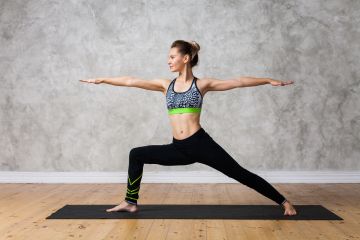
The Benefits of Working Out as a Couple

cardio classes in my area

The couple that sweats together stays together? Just maybe! Regularly working out in general is part of a healthy lifestyle, but working out with your partner can also result in a healthier relationship. According to psychologists, regular time spent together exercising can be a great supplement to couples’ therapy. Just like therapy, working out as a couple can lead to rebuilding a connection, but with the added perk of having fun. Even couples in smoother relationships can benefit from this habit of exercising with your significant other.

Accountability

There’s no better motivation than having someone to go along with you on an activity that you might otherwise consider grueling. It certainly helps that someone you care about and trust is waking you up at 5 a.m. or is waiting for you at the gym at the end of the day. There’s no room to slack off when you have each other to push the other to commit to your goals.

Camaraderie

fitness coach near me

Making regular physical activity a part of your relationship can strengthen it. There’s a reason why team-building activities involve physical exercises and games. There’s nothing like forging the spirit of togetherness than through a fun, physical challenge. One study showed that people are more likely to make a positive health change when their partner does the same.

Connection

Exercising, especially if you’re just starting out, can feel like a chore and worse if you’re doing it alone. Working out together is essentially making new memories together. Running, hiking, dance classes can become new shared passions and goals, and will allow both of you to think of the other. Non-verbal bonding is also key in any relationship. According to experts, this can help couples feel more attuned with one another.

Confidence

A fitter body will certainly up your confidence, but working out has mood-boosting effects too. For relationships that feel like they’re being tested, confidence in one’s self and in each other can be a huge help. Jealousy often aggravates a relationship, but increased confidence could remedy that.

Commitment

For many reasons, doubt will work its way into a relationship. Likewise, doubt is also a great foil when it comes to fitness goals. Encouragement, confidence and a strengthened connection can increase your chances of staying true and committed, not just to your exercise regimen but to one another.

Even couples with varying fitness levels can benefit from working out together. Be sure to choose activities that involve both of you working at the same pace. Maybe you can easily run a full kilometer, but your partner prefers to stick to light jogging. A solution to that is to take classes that are new to both of you, something fun but challenging, like aerial yoga, kayaking or spinning. You could even join a sports league together if you’re both fans of a particular sport, such as football or tennis.

It’s also important to note that while you propel one another, it also shouldn’t be seen as a competition. Certainly, it’s fun to create an atmosphere of light competition, but not to the point of creating more strain. Working out together should be seen as an invigorating measure for couples who want extra bonding, encouragement and confidence.

Workouts For Busy Mums

strength training kenmore

Packing lunch, scheduling pick-ups and appointments, shopping for groceries, getting to work on time and managing your office tasks–it seems like there’s hardly any time for a workout. There’s either too much to do in one day or you’re too exhausted by the end of the day to even roll out your yoga mat, much less drive to the gym. Staying physically active doesn’t need to be as staggering of a task as you might think. You don’t need to attend all sorts of classes or jump right on the latest fitness trend. You don’t even need to leave the comfort of your own home (or leave behind your kids who suddenly have a school project due the next morning).

Female personal trainer near me

The exercises listed here can be done in as little as 10 minutes. That’s right, that’s all the time you need in a day to stay on track towards your fitness goals. When pressed for time, what you want to focus on is quality, not quantity. For equipment, you can even use simple household items, like a towel or water bottles. You can also easily modify these workouts to fit your own needs, like if you’ve just had a baby. Even if your space is cramped and covered in toys, you could still manage to do these exercises. Just make sure you don’t accidentally step on some marbles.

Hamstring Curls

Get into starting position by lying on your back with your knees bent. Place your heels on a towel (on a slippery surface). Go into a bridge by lifting your hips up while squeezing your glutes. When you’ve fully extended your hips, extend your legs by pushing your heels as far out as you can. Avoid touching your glutes to the ground. Once your legs are fully extended, engage your hamstrings and drive your heels into the ground. Pull your heels back in towards your body as you lift up your hips up again. Do 15 reps.

Jump Lunge

Begin by standing tall and arms hanging by your sides. Take a step forward with your right leg and bend your knees so both legs are at 90 degrees. Be sure your right knee is aligned with your ankle and your left knee is hovering slightly above the ground. Now that you’re in a lunge position, explode up and jump into the air. As you land back down, alternate your legs so that the other leg is in the front position. Do 20 reps or 10 per leg. Alternatively, you can perform the lunge in place, i.e. without the jump.

Chair Squats

Take a stable chair and stand in front of it. Your feet should be hip-distance apart with toes pointing forward. Lean your chest slightly forward. Bend your knees and lower yourself to the chair, tapping your bottom on the chair, then standing up. Keep your weight evenly spread in your feet and knees in line with your feet. Do 10 to 12 reps.

Modified Push-Ups

Get on the ground on all fours and tuck your knees together. Walk your hands out and lift your feet. Place your hands slightly wider than shoulder-width. Make sure your head, neck and buttocks are aligned. While keeping your core engaged, bend your elbows and lower your chest toward the floor, then press back up. Do 10 to 12 reps.

Safety First When Exercising in Cold Weather

personal trainer fitness near me

With temperatures dropping, the will to work out is often replaced by the enticement of staying under the covers. While Brisbane is lucky to experience sunshine all year round, that doesn’t mean we aren’t exempt from chillier days or extreme changes in weather. For the outdoor-loving exercisers, this can pose several problems.

personal trainer cost brookfield

The cold can be thrillingly bracing, but it’s important to know that cold temperatures cause blood vessels to temporarily constrict, resulting in raised blood pressure. With constricted arteries, blood flow is reduced and, with physical exertion, the heart demands more oxygen. In essence, this imbalance, if severe enough, can lead to a heart attack. Elderly people, in particular, are at greater risk. Those with underlying medical conditions, like diabetes, obesity, hypertension or pre-existing heart disease can even raise their blood pressure just by spending a few minutes in extreme cold.

Though maybe you really need to get those steps in or you’ve missed too many workout days already. Still, it’s always imperative to prioritise your safety above all else. There are several ways to keep your safety in check while still getting all the outdoor exercise you need.

When all else fails, there are plenty of indoor activities that will not only keep you occupied, but warm as well. The colder the temperature and wind chill, the higher the health risks. Wearing thick apparel may seem like a good idea, but it’s better to layer on clothes. You want to avoid overheating and excessive sweating, which, when drying on your body, will make you even colder. Don’t forget your head, too. You can lose a significant amount of body heat if your leave your head exposed to the cold. Covering your mouth will also warm the air before you breathe it in. If it’s darker out, consider wearing bright or reflective clothing as well.

Before heading out, drink plenty of fluids. Dehydration may be more difficult to recognise in cold weather. If you’ve just had a large meal, give it time to digest. All the blood flow in your body will be diverted to aid in digestion instead of keeping you warm during your workout. Spend extra time warming up and cooling down, setting aside 10 to 15 minutes for each. Start slow and gradually increase the intensity of your workout to give your body time to adapt.

Listen to your body for any warning signs when you need to stop. If your chest begins to hurt, you feel lightheaded, your heart starts to race or your breath begins to get short, go back indoors. If exposed to the cold for too long, you can suffer from shivering, frostbite, and even hypothermia.

If you really must get your workout done and the elements simply will not cooperate, head to your nearest gym. You can get a day pass and take a class or two. Some great workout routines to keep you active and warm are indoor rowing, indoor cycling or spinning, yoga, Pilates classes, and circuit classes.

10-Minute Morning Yoga Practice

fitness personal trainer near me

Instead of using your extra 10 minutes to hit the snooze button on your alarm clock, get the extra energy you need for the day from a 10-minute morning yoga routine. Even on your busiest and most stressful days, you’ll find that setting aside a few minutes for yoga can be beneficial. This routine is designed to de-stress and prepare yourself for the day ahead. After regularly performing this routine, you’ll notice improvement in focus, alertness and memory. This routine is just enough to get the blood and oxygen in your body flowing, allowing for better brain activity. You can even use this to decompress after a long day. So, give yourself a moment on the mat to focus on you.

Mountain Pose

  1. Stand up with your feet close together.
  2. Root yourself to the floor using your feet and calves.
  3. Keep the natural curve of your spine.
  4. Slightly draw in your belly.
  5. Let your arms hang naturally with palms facing forward.
  6. Keep the neck long and crown of your head towards the ceiling.
  7. Hold for five to 10 breaths.

Warrior I

  1. Extend backwards your left leg, pivoting the ball of your left foot with your toes turned towards the upper left corner of your mat or at about 45 degrees.
  2. While standing up straight, bend the knee right so that your thigh is parallel to the floor.
  3. Your feet shouldn’t be on the same line, but separated as if you were standing on the sides of train tracks.
  4. Bring your arms out to the side and then up towards the ceiling. You can let your palms touch. Keep your gaze lifted up to your thumbs.
  5. Your hips should be square and facing forwards.
  6. Repeat on the other side.

Warrior II

  1. From Warrior I, while still keeping your hips squared, move them to face the side of the mat.
  2. Extend your right arm toward the front of the mat and the left toward the back of the mat with palms facing downward. Keep both arms parallel to the floor.
  3. Your gaze should be to the front and just over your right hand.
  4. Repeat on the other side.
fitness personal trainer near me

Downward Dog

  1. Start on your hands and knees, aligning your wrists under your shoulders and knees underneath the hips.
  2. Curl your toes under and push back through your hands, lifting your hips and straightening your legs.
  3. Spread your fingers and push down from the forearms into the fingertips.
  4. Let your head hang.
  5. Use your quadriceps to take the burden off your arms.
  6. Keep your hips high and sink your heels towards the mat.

Child’s Pose

  1. Kneel on your mat and sit back on your heels.
  2. Breathe in and extend your arms forward into a stretch and lay your torso over your thighs.
  3. Rest your head and extended your arms along the mat by your side.
  4. Hold for 1 to 3 minutes.

How to Exercise In A Wheelchair

female personal trainer pinjarra hills

An active lifestyle is good for everyone and having a disability, injury or other health problems doesn’t mean there are no available options. As a wheelchair user, exercise won’t just improve your physical well-being, but mental health as well. Being regularly active could even help with your disability and health issues. They key is being realistic and creative when it comes to your approach to fitness to overcome physical as well as mental barriers.

An average 30 minutes a day of physical activity is a good target to aim for. If you follow this, you’ll see improvements over time, such as better blood cholesterol, weight control, blood circulation, energy levels, stress management and the ease of anxiety.

Cheap Personal Trainer anstead

There are several types of exercises that focus on particular health benefits. Strength training would be recommended for wheelchair users because it builds upper body strength, strengthens muscles and bones and decreases the likelihood of injury. Strength exercises typically involve weights or other types of other resistance equipment. Resistance bands are a more lightweight alternative to weights. Wheelchair users should be mindful that keeping all possible muscles active is important, since an unused muscle can become weak or depleted.

Cardiovascular exercises can improve heart circulation and endurance. Swimming is a great way to get some cardio workout into your routine. Exercising in the water increases mobility without putting pressure on the body, particularly the joints. Even simple punching and traveling a great distance with a manual wheelchair can be counted as cardio exercise.

Flexibility exercises should enhance your range of motion as well as prevent stiffness. Being in a wheelchair can make you prone to stiffness, so it’s important to be as flexible and mobile as possible. Frequent stretching should help loosen the muscles and warm them up. You could also try yoga as there are wheelchair-friendly postures that can help you not only be more flexible, but de-stress as well.

Getting involved in wheelchair sports is a great way to stay fit while having some fun, whether it’s by yourself or a with a team. Disability Sports Australia has all sorts of programs, from rugby to basketball and badminton.

Finding workout resources may not be as easy as simply entering a gym and signing up for a class. You can start with workout videos online and search for specialised workout equipment. There are many new strength training machines as well as hand-cyclers specifically for wheelchair users who exercise.

If you have other disabilities, such as sight and hearing impairments, you can still get involved in physical exercise. Joining a gym or a health club with personal trainers is one way to get things going. They can help in the safe use of equipment as well as design a routine that caters to your needs and abilities.

Before venturing on your new workout routine, it’s crucial to get clearance from your doctor or physical therapist. They can also give you further advice on how you can be regularly active with your medical condition, needs and capabilities.

Night-time Habits

personal training near me

There’s a lot of pressure put on getting your morning routine right. The early bird catches the worm after all, right? However, your night-time routine should just as be as important as your morning routine. In fact, having a solid night regimen could just as be as important a predictor for your following day. If you’re truly serious about leading a fit and healthy lifestyle, the start of each day shouldn’t be your only consideration. If you want to know how you can make the most out of your evening and ensure a better morning after, then read on.

Review the day

Planning your day ahead also means looking back at the one that’s just finished. Reflect on what you accomplished and what challenges you faced since you woke up, particularly in relation to your health and fitness goals. Did you drink enough water? Was your lunch lacking protein? Did you take the stairs instead of the lift? Think of this as guilt-free exercise to simply take stock of your day. There’s no need to mentally beat yourself up if you think you made a mistake. Use your positive insights to bolster yourself and the less than positive ones to make a more solid plan for the next day.

Early to bed

How can you tell when’s the perfect time for going to bed? We’re supposed to get eight hours of sleep, so if you need to be up by 6 a.m., then you should be in bed so that you are asleep by 10 p.m. the night before. You could be under the blankets on the dot, but that doesn’t mean you’re completely asleep. In fact, it takes 30 to 60 minutes for our brains to fully relax and allow sleep to set in. This is why some people have difficulty falling asleep. If you’re one of those, try to see exactly how long it takes for you to doze off. It takes the average person 14 minutes to get to sleep once relaxed in bed. You then should be able to figure out your own perfect bedtime.

Mindful eating

Personal Training Kenmore

Should you eat after 6 p.m.? Stay off late-night snacking? There’s plenty of debate surrounding eating at night, especially when you’re about to go to sleep. For some people, a light, hot snack can make them feel ready for bed, while others cope with digestive issues. There’s no simple answer to nighttime eating. Follow your body’s signals. This means being mindful of when you’re hungry and when you’re full.

Setting an intention

Once you’ve gone over the day, think about how you want the next day to be. Note what’s the most important thing for you tomorrow. This shouldn’t just be limited to diet and exercise. Maybe you want to catch up with an old friend, finish a report early at work or spend 30 minutes less on your phone.

How to Exercise with Knee Pain

personal training kenmore

Do you have arthritic knees? Are you suffering from a recent knee injury? Are you prone to stiffness and swelling in the joints? These problems shouldn’t stop you from regular physical activity because exercise can actually help you cope and live a fuller, more active lifestyle. With regular exercise that specifically targets your knees, you can maintain the joint’s full range of motion and strengthen the supporting muscles, which will then enable you to absorb shock. This means being less prone to injury, greater balance, better circulation, and improved flexibility and strength.

Discomfort, particularly at the beginning stages of your physical routine, is normal. Being sore the day after is normal, but if you feel severe pain, swelling or stiffness, even days after your workout, you should see your doctor. To prevent discomfort, place a moist-heat pack on your knee for 20 minutes before you begin your exercises. Heat will help decrease stiffness. If you take pain medications, take them 45 minutes before exercising. After your workout, place an ice pack on your knee for 10 to 15 minutes. This will help bring down any swelling as well as soothe pain.

The exercises listed here can be performed at home with no equipment required. They are low-impact on the joints while still being effective. Aside from these exercises, you can also try other low-impact workouts. Walking at a gradual pace can strengthen muscles and bones. Swimming keeps you mobile and active, and the buoyancy due to the water means your joints don’t have to work as hard.

Leg Raises

This strengthens your quadriceps, which are the front thigh muscles. Lie flat on your back with your arms resting at your sides. Keep your toes pointed up. While tightening your leg muscles and keeping your leg straight, lift it up several centimetres. Activate your core. While your foot is up, hold for 5 counts and then slowly lower your leg. Repeat the same motion with the other leg.

Bridges

Lie on the ground your feet flat on the floor and hip-width apart. Place your hands by your sides. Press your feet into the floor and slowly lift your buttocks off the ground you lifting your hips as high as you can. Be sure your body is in one straight line. Lower yourself back down and repeat 10-15 times.

Hamstring Stretch

Your hamstrings are the muscles at the back of your thighs and can cause pain or injury if too tight. Lie on the floor with your legs bent. Slowly lift one leg with your knee still bent and draw the knee towards your chest. Place your hands behind your thigh, below your knee but not directly behind it. Pull your leg back until you feel the stretch. Hold this for 30 to 60 seconds and then slowly behind your knee and lower your leg back to the ground.

Half Squat

personal training kenmore

This exercise will strengthen your thigh muscles and gluteals. Stand with your feet shoulder-distance apart. As you stretch your arms in front of you, slowly bend your knees until you are in a half-seated position. If you need extra balance, hold onto a chair. Make sure your back is straight and your chest lifted. Hold the position for 5 seconds and then slowly stand back up. Repeat 10-15 times.

The Benefits of Fixing Your Posture

Personal Training Kenmore

Posture is defined as the position your body maintains while standing, sitting, or lying down. Since childhood, we’ve been reminded to stand straight–with good reason. Good posture means creating the least amount of strain on supporting muscles and ligaments when you move or perform weight-bearing activity.

So, how can you tell if you have good or bad posture? Contrary to popular belief, a good posture does not necessarily mean keeping your spine totally straight. It can be exhausting to keep your back fully straight. By constantly tightening your back muscles, you end up creating stress in the process. Correct posture should feel almost effortless to maintain. The weight of your body should be evenly distributed on your feet, not the heels or the forefoot.

Good posture means maintaining the natural curves of your back, i.e. the curves at the neck, upper back, lower back and hips. Also, when standing with good posture, you should be able to draw an imaginary straight line from your earlobe through your shoulder, hip, knee and the middle of your ankle. Meanwhile, good sitting posture means having your back straight and buttocks at the back of your chair with your feet flat on the floor and knees bent at a right angle.

Personal Training KenmoreAside from greater support, the benefits of having correct posture are numerous. Back and neck pain can be avoided and even reduced for those regularly suffering from such pain. Muscle aches and muscle fatigue can also be prevented. Bones and joints are kept in proper alignment so muscles move more efficiently.

Abnormal wear and tear on joint surfaces lead to arthritis, but this can be prevented with good posture. You can also avoid developing abnormal permanent positions, which can cause spinal disk problems and constricted blood vessels and nerves. You can also prevent other complications like back aches, back pain, pressure inside your chest and poor blood circulation.

Great posture can facilitate breathing, opening the airways and allowing for enhanced oxygen flow. This is why exercises such as yoga, Pilates and meditation place a lot of emphasis on breathing and posture. When you are breathing properly, you increase your concentration and thinking abilities as well. The more oxygen we get, the better.

Lastly, aside from feeling better, you’ll look better. Good posture is one of the easiest ways to boost self-confidence. This helps to make good first impressions as you appear to be sure of yourself and even taller and slimmer.

If you think you have bad posture, here are some tips to help:

Pretend your body is held by a string

Pretend that your spine and head is held up by a string from the ceiling all the time. If you are lying down, pretend the string is held in a direction parallel to the ground.

Get a head, shoulder and back massage

Bad posture can lead to stiff joints, so a massage could help you loosen up.

Get a good quality chair or a back cushion

A firm and dense cushion will provide greater back support. Also, remember to keep your rear at the innermost edge of the chair.

Ground both feet when standing or sitting

You may tend to shift your weight from one foot to another. Keep them both planted on the ground at the same time.

Reasons to Start Boxing

Boxing Classes Kenmore

Boxing isn’t reserved for the athletically and physically gifted. Even if you think you don’t have enough upper-body strength or proper hand-eye coordination, boxing can be a terrific workout. It focuses on multiple areas of the body and is an effective calorie-burner. You can learn self-defense moves, improve your posture, and even boost your mood. While boxing is a sport, it doesn’t have to be combative. Even older people can benefit from boxing. Despite the creaking joints, especially in the hips and knees, boxing also uses your upper body.

If you’re tired of the same old gym routine, read on and see why you should sign up for a boxing class now.

Core workout

Crunches and pull-ups are great and all, but if you’ve been working hard on your abs, boxing could take you a step further. Since boxing requires you ‘sit’ at a lowered stance, you’ll be working your quads and abs to achieve a low center of gravity. While you’re punching and jabbing, that power comes directly from your core.

Cardio and strength

Boxing Classes KenmoreAccording to boxing pros, you can burn more calories with 15 minutes of boxing than an hour of being on a treadmill. In fact, boxing has the potential to burn 780 calories an hour or 13 calories per minute, which is similar to running and cycling. You’re also using your entire body for punching and sparring. Cardio exercises keep you in great condition, which is why boxers are in great physical condition even after tough matches. Boxing mixes strength training with cardio too, which is also effective in burning calories and fat. Strength training is essential in boxing not just to keep you toned, but to improve your endurance. And, if you want more sculpted muscles than building more muscles, boxing is also great for such a purpose. It can tone your upper arms, core, chest, hips and calves.

Hand-eye coordination

Boxing is definitely one of those workouts that will train more than your muscles. Improved hand-eye coordination can make you much sharper and more alert. Boxing is an effective way to up this skill, especially if you’re sparring. There’s added pressure if you’re avoiding jabs compared to, for example, aiming your tennis racket to hit the ball.

Rhythm

Boxing is more than just punching when the need calls for it. Your mind and body need to establish a rhythm to keep your moves coordinated, which is why you’ll be doing a lot of repetitive work. You want to be quick, but not lose pace so to keep your focus and endurance going.

Target muscle groups

Boxers are well-toned not just because of their strict regimen. Boxing overall is a workout that targets several muscle groups at once, especially ones that people often tend to miss, like the arms, back, shoulders and core.

Stress relief

What better way to take out your anxieties and worries on a literal punching bag? Boxing is a great way to decompress after a long day for some people who prefer something a little more dynamic and forceful than, say, yoga or swimming or jogging.

How Much Exercise Do We Really Need?

Personal Training Brookfield

We’re continuously encouraged to exercise, but how much exercise is enough exercise? Turns out, exercise doesn’t mean you have to be an exhausted, sweaty pile of limp limbs after your workout. It all really just depends on your reason for exercising. For many people, exercise is the stepping stone to losing weight. For others, it’s to maintain health or rehabilitate from injury.

As with any major commitment, you need to be realistic about your goals as well as your needs. You will also need to be specific about activities, your schedule, and the intensity of your workouts. For beginners, you will want to set a foundation on which to build your routine. Everybody has their own pace, so commit to finding your comfort zone and begin there. Slowly build intensity and variety to increase the effectiveness of your workout and so you won’t get stuck in a rut.

If you don’t know where to start, don’t be afraid to book a session or two with a personal trainer at your local gym. Also, if you have certain needs, weaknesses, or injuries, like high blood pressure or an injury, you should speak to your doctor to make sure your choice of workout will not make things worse for you.

Personal Training BrookfieldLosing weight and preventing weight gain

Perhaps the most popular reason why people get into exercising in the first place is to shed a few kilos or make sure they stay fit. To get you started, 200 to 300 minutes a week of moderate exercise can help you lose weight. You can mix it up with activities like running, boxing and yoga. If you’ve hit your goal and want to stay there, 150 to 250 minutes of weekly exercise or 20 to 35 minutes of daily exercise can help you maintain your weight.

Improve heart health

One research has shown that people looking to decrease their blood pressure benefitted from 61 to 90 minutes of exercise a week. Another study proved that at least 30 minutes of moderate exercise five times per week aided heart patients.

Lower risk of type 2 diabetes

Interval training has been found to help lower the risk of type 2 diabetes. Interval training involves a series of workouts of varying degrees of activities and intensity with rest periods. According to one research, the insulin sensitivity of participants improved after completing a 10-minute interval training cycling workout for 12 weeks. Improved insulin sensitivity is important in lowering the chances of developing type 2 diabetes.

Lower risk of cancer

Some cancers can be prevented with regular exercise, such as breast, colon, and endometrial cancers. Experts recommend 150 minutes of moderate physical activity or 75 minutes of vigorous activity per week.

Increase longevity

One study suggests that 150 minutes of moderate exercise each week gives you a 31 percent lower risk of dying prematurely. Another study compares people who exercise three times a week for a total of 450 minutes to those who don’t exercise at all. The exercisers showed to have a 39 percent chance of living longer than their less active counterparts.

Improve mental well-being

Regular physical activity has feel-good benefits, too. Walking briskly for 35 minutes a day for five days a week or 60 minutes for three days a week can improve mild to moderate depression, according to one study. Stress levels are reduced while physical health and vitality are improved. The brain can feel the benefits of your workout as well. One research has shown that 120 minutes of moderate aerobic exercise a week increases the size of the hippocampus, which is the part of our brain responsible for memory and learning.